When Your BMW Brakes by Itself: A Life-Threatening Safety Issue We Solved
One of the more unsettling faults a modern BMW can develop is applying its own brakes at speed, seemingly at random, with no warning light and no stored fault code to explain it. We diagnosed and cured exactly this on a 2014 BMW 316, after two other garages, a BMW dealer included, had found nothing. If your BMW is doing something similar, it is worth understanding what causes it, because the fix is very specific.
Experiencing unexpected braking on your BMW? Call us for a proper diagnosis: 01582 733036
The symptom pattern
The fault built up over several months rather than appearing all at once, which is part of why it is hard to catch. It began as occasional power loss at speed and progressed to full episodes of the car braking itself, only ever at higher speeds and always without a dashboard alert. Because nothing was logged, a routine scan showed a clean bill of health, which is exactly where a less thorough approach comes unstuck.
How we found it
Rather than assume an engine or turbo fault, as others had, we noted that the car carried BMW's Dynamic Stability Control with an active braking function, not just basic cruise control. We test drove it under controlled conditions, experienced the same self braking, and got the breakthrough by disconnecting the ABS and ESP control unit: the problem vanished, and returned the instant it was reconnected. That pinned the fault firmly on the stability control brake electronics.
The root cause: brake drying gone wrong
The culprit was BMW's brake drying function, a feature on many modern BMWs that lightly applies the brakes above 43mph when rain is detected, to wipe the water film off the discs for better stopping. In this car it had begun triggering when it should not, for three reasons working together.
| Contributing cause | What it did |
|---|---|
| Contaminated brake fluid | Excess moisture upsetting the hydraulics |
| Corroded ABS and ESP valves | Not releasing pressure cleanly |
| Oversensitive rain sensor | Activating the function unnecessarily |
How we put it right
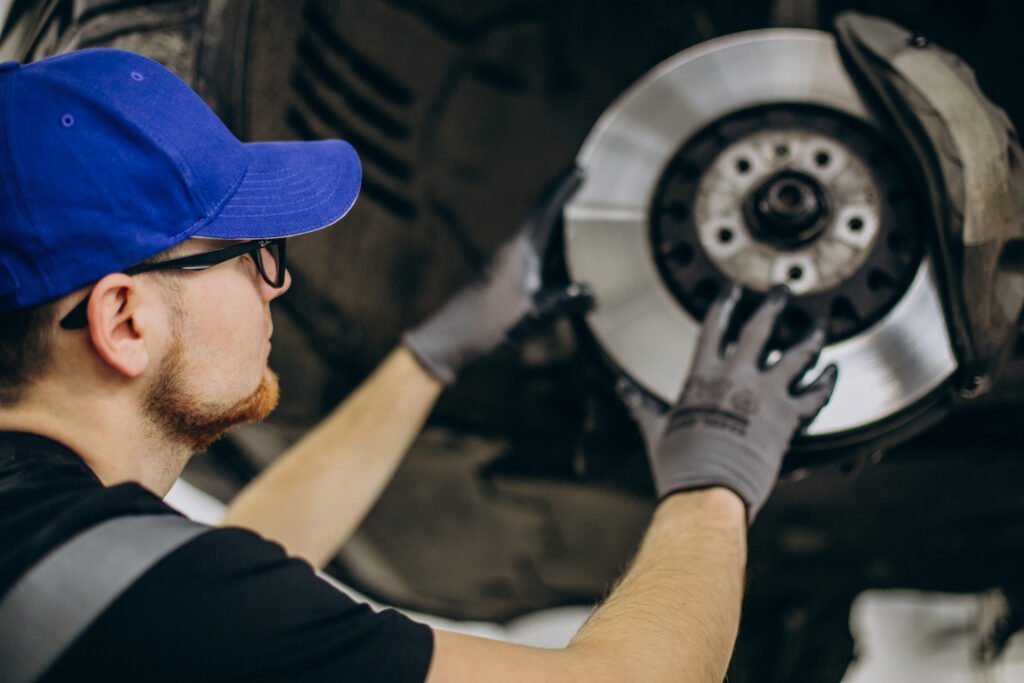
We removed the ABS and ESP unit and sent it to automotive electronics specialists for professional reconditioning, then flushed the entire brake system with fresh fluid to the correct specification, bled it through using BMW's own procedure, and checked every brake component for damage. A brake test bench check and road testing in varied conditions confirmed the repair: no more unexpected braking, and every safety system working as it should.
The lesson: change the fluid every two years
This fault traces straight back to old brake fluid. Because it is hygroscopic and absorbs moisture over time, contaminated fluid corrodes internal components, can create air bubbles under pressure and, as here, can make an electronic safety system misbehave. A fluid change every two years is a small job that prevents a genuinely alarming one. Cracking a fault like this needs the right diagnostic software, a real understanding of BMW's safety systems, access to specialist reconditioning and a patient, methodical approach to an intermittent problem, which is why it stayed hidden elsewhere.
BMW fault finding across Luton and beyond
We are on Dudley Street in Luton and take on the BMW faults other garages cannot pin down, for drivers from Luton and the surrounding towns. If your BMW is behaving oddly, especially where safety is involved, it is always worth getting it looked at properly rather than living with it.