Understanding Brake Systems: Why Expert Service Matters for Modern Cars
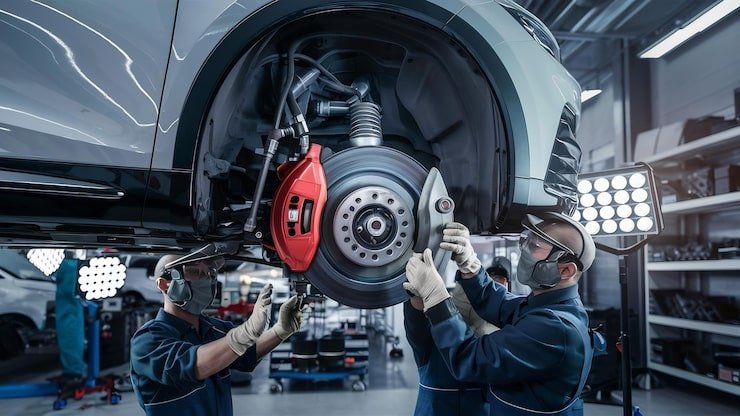
The brakes on a modern car are a world away from those on a car of twenty years ago. Alongside the pads and discs sit ABS, electronic stability control, brake by wire, regenerative braking on hybrids and sensors for the electronic parking brake, all talking to the car's computer. That is why a brake job is no longer just a pad swap, and why getting it done by someone who understands the electronics matters as much for your safety as for passing the MOT.
Not sure your brakes are behaving as they should? Call us and we will take a look: 01582 733036
The electronics behind the pedal
Press the brake pedal on a modern car and a network of systems goes to work, adjusting pressure at each wheel far faster than any driver could. When one of them is upset by a careless repair, the result can be a warning light, an MOT failure or, worse, braking that is not there when you need it.
| System | What it does |
|---|---|
| ABS | Stops the wheels locking under hard braking, adjusting pressure hundreds of times a second |
| Electronic stability control | Brakes individual wheels to keep the car stable and pointing where you steer |
| Electronic parking brake | Holds the car with a motor and sensors rather than a cable and lever |
| Regenerative braking | Recovers energy on hybrids and EVs, blending with the friction brakes |
Why brake fluid is not an afterthought
Brake fluid is hygroscopic, meaning it draws in moisture from the air over time, and that quietly lowers its boiling point. Under heavy use, a long descent or an emergency stop, water in the fluid can boil and cause brake fade, the frightening moment when the pedal goes soft just as you need it most. Different cars take different fluid, DOT 4 or DOT 5.1 among them, and fitting the wrong one damages seals and hurts performance. We test the moisture content during a service and always use the correct manufacturer specification, which is why a fluid change every two to three years is money well spent.
Wear tells a story, if you read it
Pads and discs never wear perfectly evenly. The fronts go faster than the rears, which is normal, but the wear should match from side to side. When it does not, it points to something else, a sticking caliper, a suspension issue or a particular driving habit, and spotting that pattern early prevents vibration, noise and a premature failure. A proper inspection reads the wear rather than just measuring what is left.
Where specialist diagnostics save real money
Some brake faults live in the electronics, and this is where many garages reach for an expensive part they do not need. A good example is a common fault code on VW, Audi, Seat and Skoda, C123EF0, which lights the ABS warning. Most workshops would quote to replace the whole ABS module, often £800 or more, when the fault is nearly always software. We have developed an in house software fix that clears it properly, without a new module, and we cover it in detail in our guide to the C123EF0 fault.
| The car | Quoted elsewhere | What it actually needed |
|---|---|---|
| VW Passat, ABS light on with C123EF0 | £800 plus for a new ABS module | Our in house software fix, cleared the same day |
| BMW 3 Series, vibration under braking | £600 plus for discs on all four wheels | One warped front disc and uneven front pads |
What makes our brake service different
We have invested in the same dealer level diagnostics the main dealers use, so we can read manufacturer specific codes, activate components and run software updates that most independents cannot touch. As an independent specialist, we are also authorised to update the digital service records for VAG, BMW and Mercedes-Benz, so your history stays complete without a dealer visit. And we will always show you the worn part and give you honest options, whether the work is needed now for safety or can safely wait, with most brake jobs finished the same day.
Brake care across Luton and beyond
We are on Dudley Street in Luton and look after drivers from across the area for brake work, from a routine brake repair to the trickiest ABS fault. Alongside Luton we regularly see customers from Dunstable, Houghton Regis and the wider Bedfordshire area.
Brake questions we hear a lot
How often should I have my brakes checked? A professional inspection every 12 months or 12,000 miles, and sooner if you notice vibration, noise, a spongy pedal or a warning light.
Can pads be replaced without upsetting the ABS? Yes, but only with the proper tools and manufacturer procedures. Incorrect work or the wrong parts can trigger ABS warnings.
Can every garage handle electronic brake faults? No. Many independents cannot fully diagnose or repair ABS faults, especially manufacturer specific codes. We have the equipment and knowledge for the complex ones.
Can I combine a brake service with my MOT? Yes, and many customers do, so anything found at the test can often be put right the same day.
How do I know if the brake fluid needs changing? Usually every two to three years, and we test the moisture content at every service to be sure.
How do I book? Use the booking button below any time, or give us a call.